Case Study,
New CMS System & Website
A client‑initiated greenfield CMS and website platform for Sanofi Genzyme
This project was designed to deliver video content about rare diseases to healthcare professionals. Because the content involved sensitive medical information, the platform required a robust governance model, including role‑based permissions, structured approval workflows, and clear content ownership.
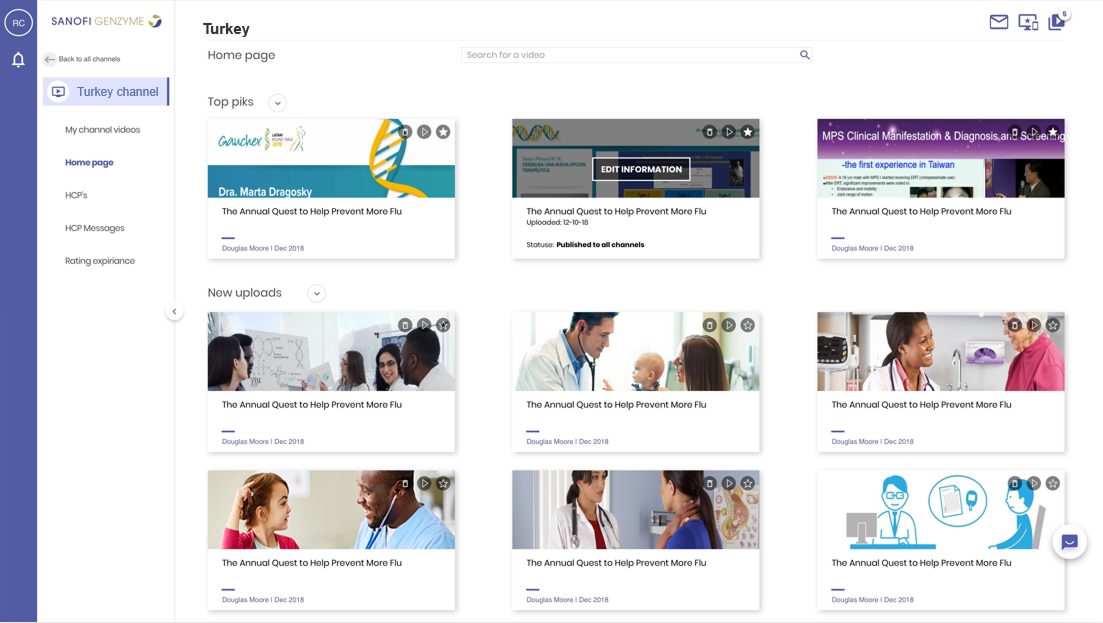
CMS System

Goal
Create a scalable, compliant video platform and CMS for managing and publishing rare disease content across multiple countries.

Impact
Defined the UX foundations, governance model, and workflows that enabled safe, scalable content operations.

Success Metric
Role-based access and approvals validated, Multi-country content restrictions supported, CMS and website workflows aligned, Editorial publishing process efficient and error-resistant
Product Context & System Constraints
A greenfield video platform and CMS for healthcare professionals, designed to deliver rare disease content while supporting content governance, editorial workflows, and multi-country operations.
Regulated medical content required strict approval workflows, role-based permissions, country-specific content restrictions, and close alignment between CMS logic and website behavior.
Role, Responsibilities & Design Scope
The project ran over a 6‑month period using an agile delivery model with daily stand‑ups and regular review cycles. The core team consisted of a project manager, myself as the UX designer, and a distributed development team based offshore, including a scrum master and three developers.
My responsibilities:
UX ownership of a greenfield CMS and website platform.
Definition of roles, permissions, approval workflows, and platform logic.
Design of scalable editorial and publishing flows
Roadmap contribution and UX prioritization.Wireframing, UI design, and usability testing coordination.
3. Coordinating CMS and Website Development in Parallel
The CMS and public-facing website were developed simultaneously and were highly dependent on one another. Without a dedicated Product Owner, I took ownership of defining feature requirements, prioritizing functionality, mapping dependencies between both systems, and creating a phased delivery roadmap for the development team. This involved ensuring that features were built in the correct sequence so that workflows could function end-to-end and be tested effectively across both platforms.
4. Planning End-to-End Validation and Testing
Given the platform's complexity and compliance requirements, testing extended beyond individual screens and features. I organized the testing approach across user roles, workflows, devices, screen sizes, and content formats, ensuring that interactions between the CMS and website could be validated holistically. This helped identify dependency issues early and ensured a consistent experience across desktop, tablet, and mobile environments.
The Challenges
1. Designing for a Regulated, Multi-Country Environment
A key challenge was defining a scalable platform that could support multiple countries, each with its own content restrictions and governance requirements, while enabling controlled collaboration between local teams and the central agency. Because many decisions around roles, permissions, workflows, and content ownership would become foundational to the platform, system clarity and risk management were critical from the outset.
2. Aligning UX, Business Rules, and Technical Implementation
Working with a geographically distributed team required clear documentation, shared understanding of workflows, and close collaboration to ensure UX decisions were translated accurately into technical implementation. The complexity of content states, approval flows, and access control meant that UX, development, and stakeholders needed to stay closely aligned throughout the project lifecycle.
CMS
Users:
Content Creators & Reviewers
Country Managers & Administrators
Key needs:
Clear role-based responsibilities
Safe and compliant publishing workflows
Multi-country content management
Efficient collaboration and governance across teams

Users & Needs
Video Platform Website
Users:
Healthcare Professionals (HCPs)
Key needs:
Quickly discover and access relevant medical video content.
Trust that content is accurate, approved, and compliant.
Defining Roles and Permissions
CMS

Master Admin
upload approved content (videos) with general approval zinc code through the CMS, view & extract statistics.
Add new user to the CMS and change their roles.
Has all the permissions of CMS Admin and Country manager.

Global Admin
can see all the statistics for the videos, view all uploaded content, add local approval zinc, upload translations, add and edit text.
Invite local HCP's to watch a specific video.
Add and edit the platform rating experience questions.
In addition, has the permissions of the country admin.

Country Admin
can send emails to registered users or specific unregistered HCP's to inform them of new content,
can add new users to the website and send a confirmation email to the user,
add local approval zinc.
Receive the messages from the HCP's and send a response.
Video Platform Website

Before Login HCP
can see a short welcome text,
able to register / login.

Registered HCP
can watch all approved videos from his country,
answer the platform rating questions,
and leave a message per video.
Site Maps & Backend Connections
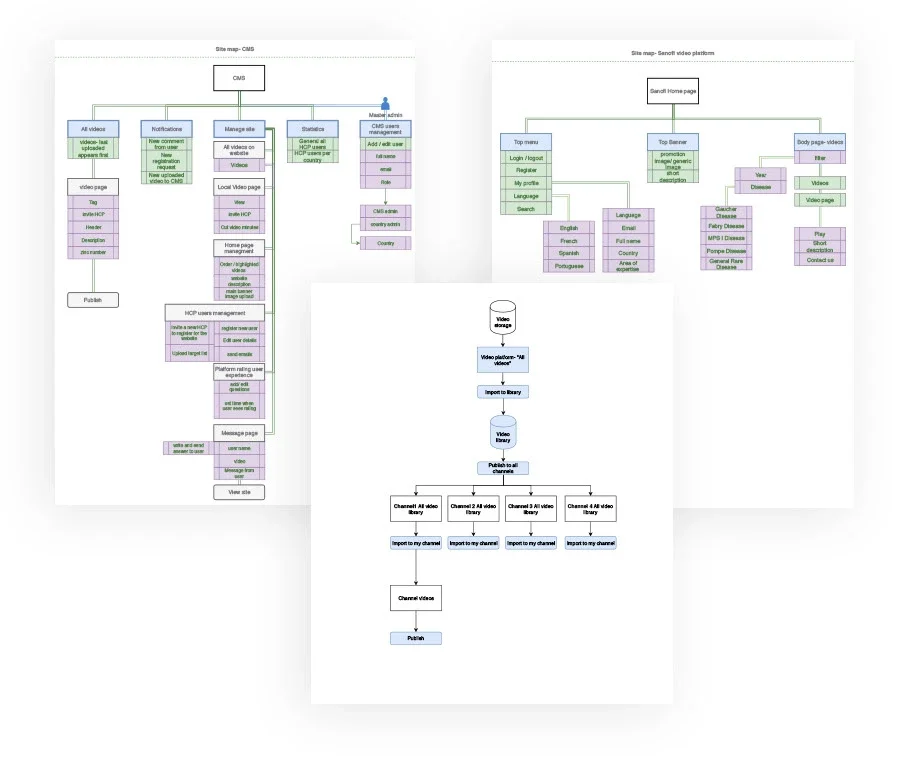
As an early foundation of the project, I defined the information architecture and system structure for both the CMS and the public‑facing website.
The goal was not only to map pages, but to establish a shared understanding of content types, user roles, workflows, and system boundaries across UX, development, and client stakeholders.
The site maps for the CMS and the website were used to align functional requirements, editorial workflows, and access levels, ensuring that both systems evolved coherently rather than as separate products. This helped surface gaps and dependencies early, reducing ambiguity during development and approval discussions.
In parallel, I worked with the team to define how the CMS would connect to backend services and external support systems, translating technical constraints into UX‑relevant concepts such as content states, synchronization points, and error handling.
This allowed UX decisions to be made with a clear understanding of how data, permissions, and approvals flowed across the platform.
User Flows & User Stories
CMS
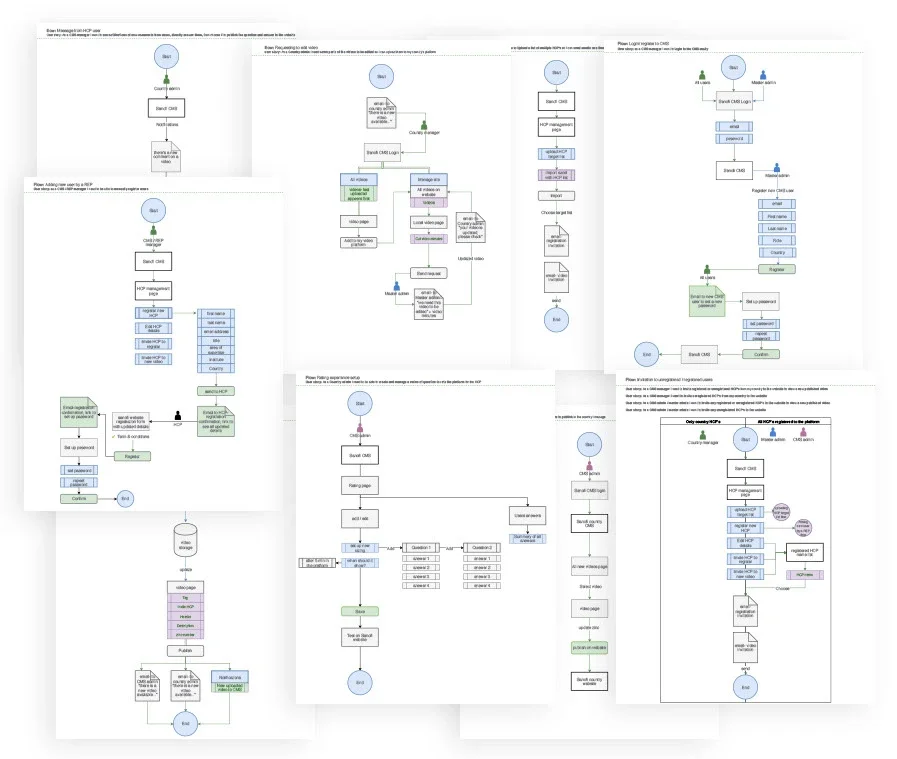
User flows and user stories were used as a tool to define and validate the CMS’s core workflows rather than to document every possible interaction. The focus was on modeling how different roles—such as content creators, reviewers, and administrators—interacted with the system across key stages like content creation, approval, and publishing.
Instead of listing all user stories, I worked with the team to identify representative and high‑impact scenarios that exposed system complexity, permission boundaries, and edge cases. These flows helped align UX, business logic, and backend behavior, and were used to clarify responsibilities, content states, and approval rules early in the process.
This approach ensured that the CMS was designed around scalable workflows and governance needs, rather than an accumulation of isolated features.
Video Platform Website
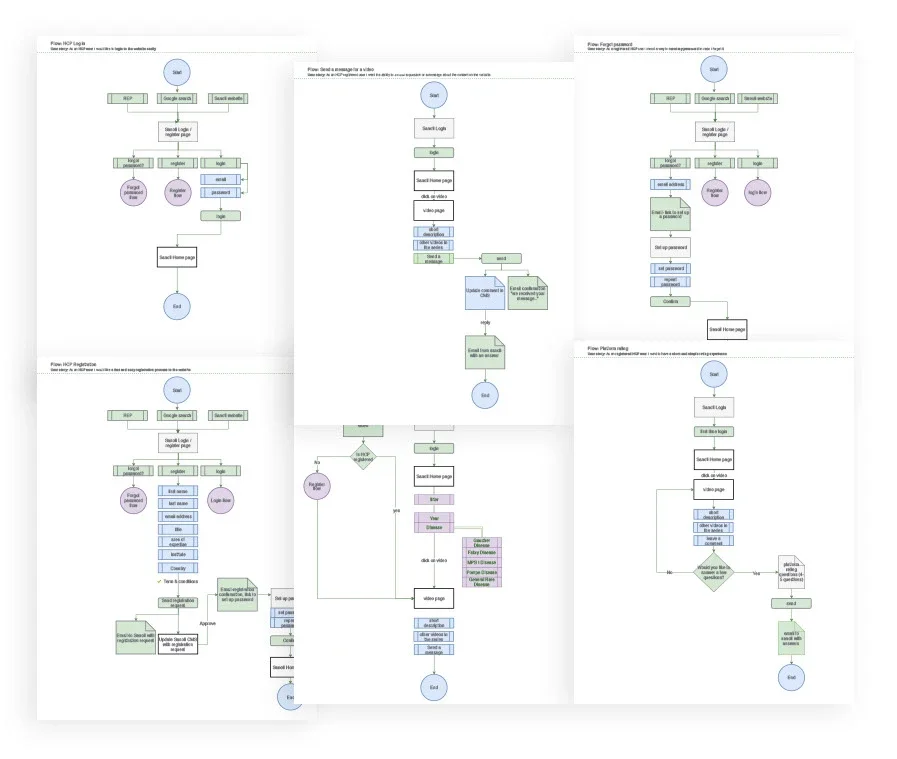
The video platform website and the CMS were tightly connected, with many user actions on the website directly affecting content state, visibility, and behavior in the CMS. To manage this dependency, I used user flows and selected user stories to model how end‑users interacted with video content and how those interactions propagated back into the platform.
These flows focused on critical journeys—such as content discovery, access control, and regional availability—rather than documenting every possible interaction. The goal was to ensure that website behavior remained predictable, compliant, and aligned with CMS logic, especially given the sensitivity of the medical content and the need for country‑specific restrictions.
By mapping website journeys alongside CMS workflows, we were able to validate assumptions early, surface edge cases, and ensure that both systems evolved as a coherent platform rather than as loosely connected products.
Product development Road-map
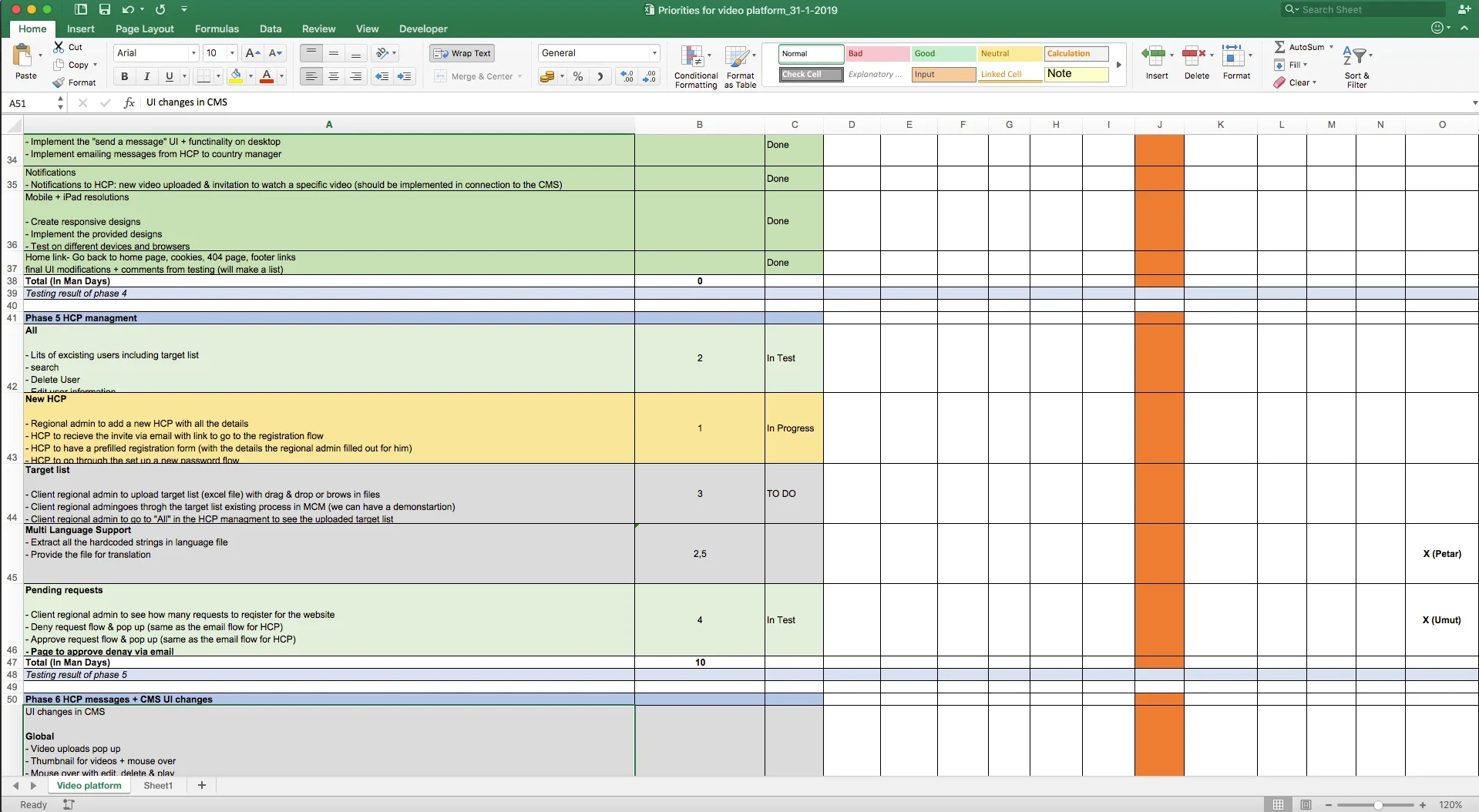
Because the CMS and the public‑facing video platform were developed in parallel and were tightly interdependent, defining a clear and flexible roadmap was critical to the success of the project. The roadmap was used as a coordination tool to manage dependencies between systems while allowing room for iteration as requirements evolved.
The first step was to define the MVP in terms of system viability rather than feature completeness—identifying the minimum set of capabilities required for the platform to function safely and coherently across content creation, approval, and publishing. From there, features from both the CMS and the website were mapped and evaluated along two dimensions: functional dependency between the systems, and priority based on business value and user impact.
Based on this analysis, the roadmap was structured into phased deliveries, with each phase ending in a validation and testing cycle. This approach allowed UX, development, and stakeholders to align on near‑term goals while maintaining flexibility to adjust scope and sequencing without compromising the integrity of the platform.
Roadmap
1.
MVP - Basic Connection form video storage to CMS and then to website, home page + video page.
2.
Video platform website - Execute desktop mockups including all the pages and features
3.
Video platform website - Mobile, iPad/Tablet
4.
CMS - User management, website management
Wireframes
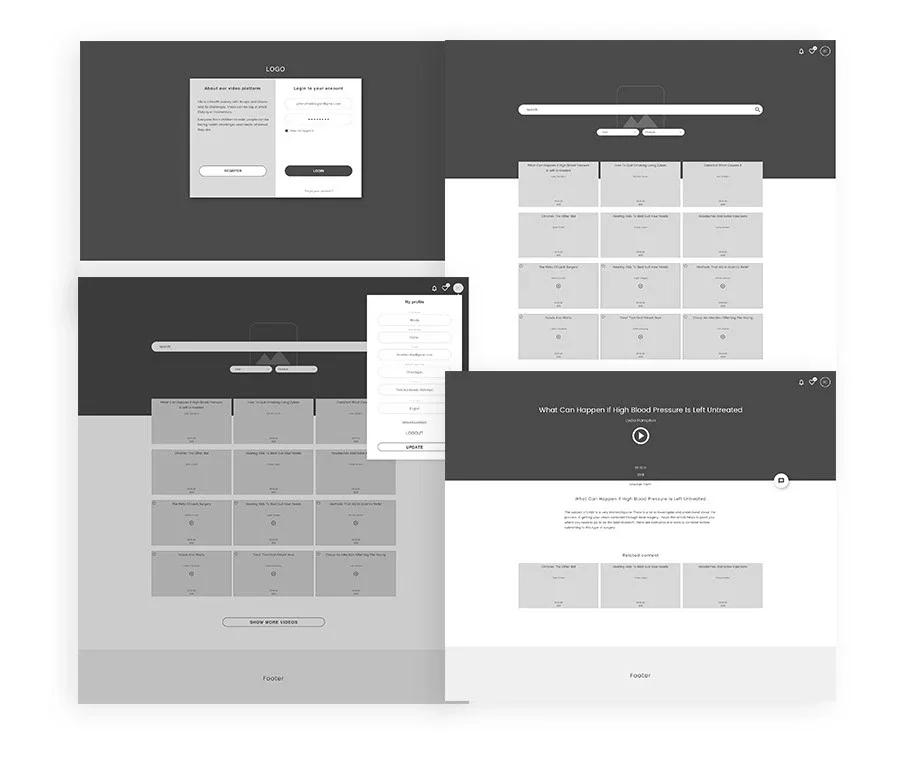
Wireframes were used as a validation and alignment tool rather than as a visual design exercise. Their primary purpose was to confirm that key workflows, permissions, and system behaviors worked as intended before committing to visual design or development.
I focused on wireframing a small set of critical screens that represented the platform’s core interactions and highest risk areas. These included:
Login, to validate authentication, access control, and role‑based entry points
Homepage, designed around search, filtering, and content discovery, reflecting the platform’s role as a content‑first system
Content detail pages, to test how video and supporting medical information were presented and constrained
User profile, to validate personal settings such as language selection and account‑level preferences
These wireframes were used in client reviews and usability sessions to validate assumptions, surface edge cases, and ensure that both website behavior and CMS logic were aligned before progressing to high‑fidelity design.
Mockups
CMS
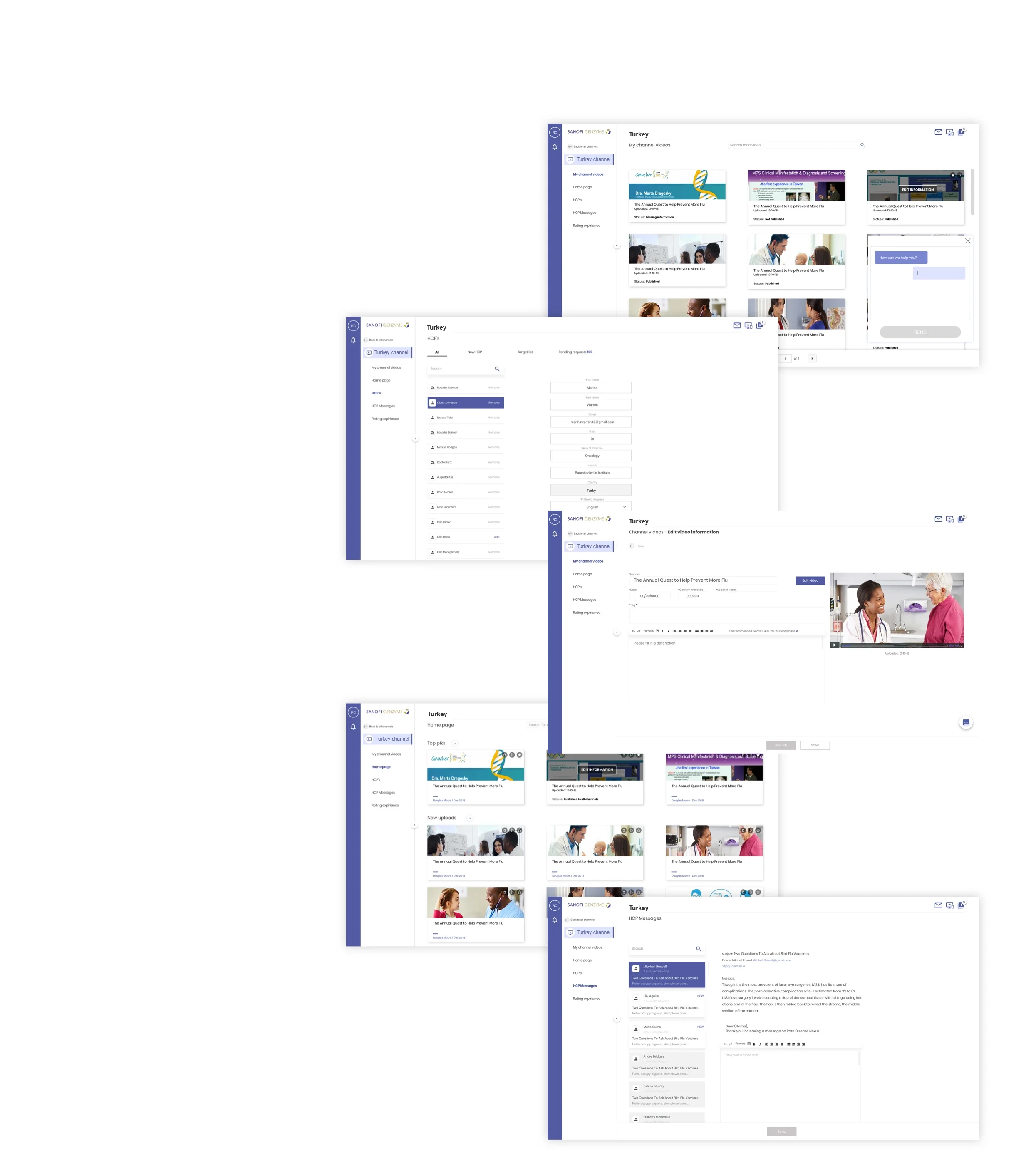
The CMS mockups were designed to support controlled content management in a regulated, multi‑country environment. The focus was on enabling clear ownership, safe publishing, and structured communication rather than on visual complexity.
I concentrated on a set of key CMS views that represented the platform’s core responsibilities and governance needs:
Role‑based dashboards for overall managers and country managers, reflecting different levels of responsibility, visibility, and control
Video publishing flows, designed to guide users through upload, metadata entry, and approval‑ready states
User and communication management, including responding to user inquiries and reviewing registration requests, to centralize moderation and compliance tasks
Video edit requests, allowing controlled changes without bypassing approval workflows
Integrated support access, ensuring that operational issues could be addressed without disrupting editorial workflows
These mockups were used to validate workflows, permissions, and edge cases with stakeholders and developers before finalizing visual design and implementation.
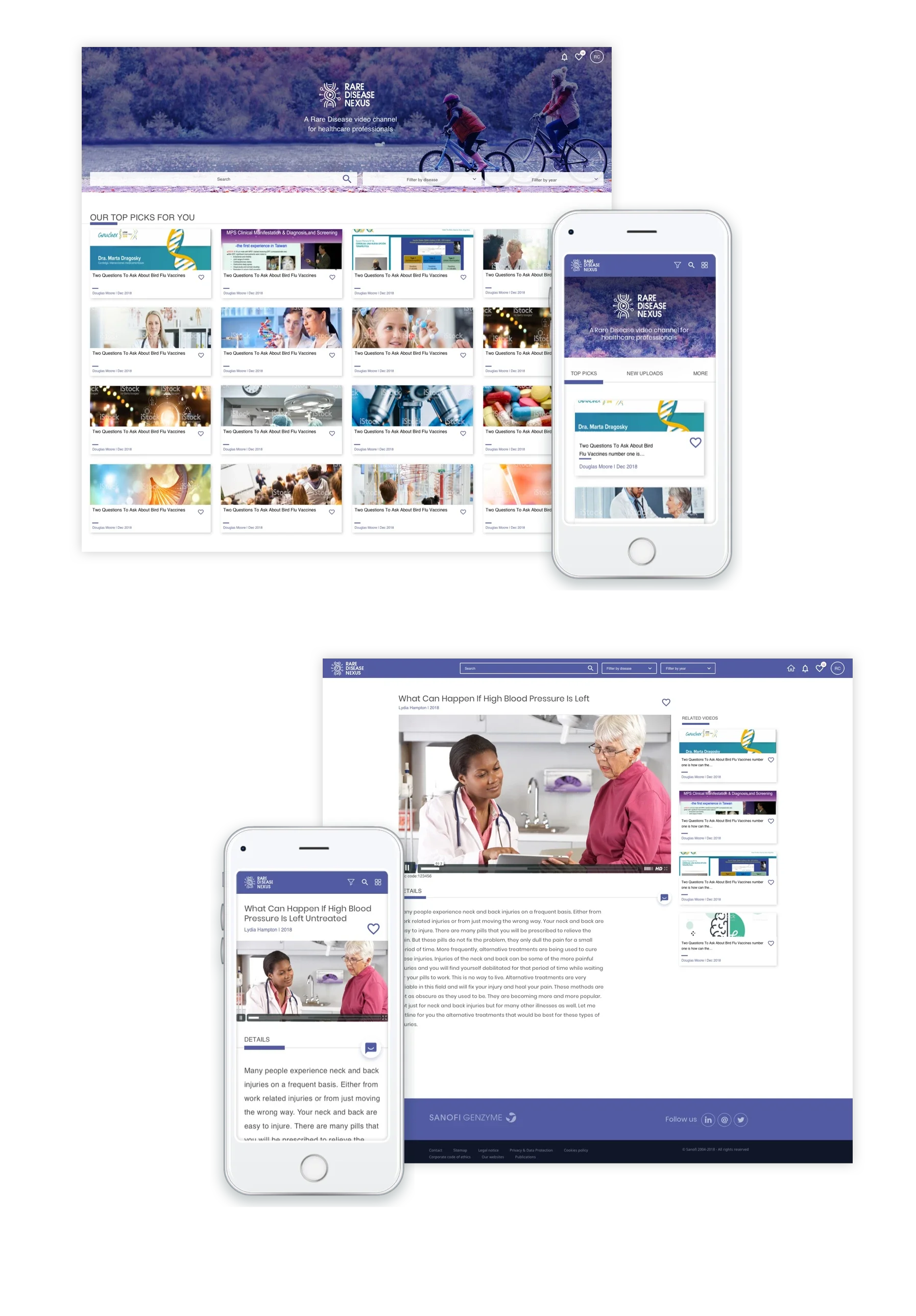
Website
The website mockups focused on content discovery and consumption, while remaining tightly aligned with CMS logic, access control, and regional constraints. Because the platform served as a content‑first experience for healthcare professionals, search and filtering were treated as primary interactions rather than secondary navigation elements.
Content discovery was structured around a small number of clearly defined categories to reduce cognitive load and help users quickly locate relevant medical information within a large video library.
These mockups were designed to validate how CMS‑driven metadata, permissions, and content states translated into the end‑user experience.
Key website views included:
Homepage, centered around search, filtering, and curated video content
Favorites, allowing users to save and return to relevant content without duplicating CMS logic
Video detail pages, combining video playback with supporting information while respecting content restrictions
User interactions, such as commenting, designed to enable engagement without compromising moderation or compliance requirements
These mockups were used to validate user journeys, content visibility rules, and CMS‑website alignment before final visual design and development.
Key Decisions & Trade Offs
Designing a regulated, multi‑country video platform required making deliberate trade‑offs early, particularly where usability, flexibility, and compliance intersected.
Flexibility vs. Compliance
We intentionally limited certain editing and publishing capabilities to reduce the risk of bypassing medical approval workflows. While this reduced flexibility for power users, it ensured content accuracy and regulatory safety.Simplicity vs. Editorial Control
The CMS interface was designed to surface only role‑relevant actions rather than exposing all options to all users. This improved clarity and reduced errors, at the cost of additional configuration effort upfront.Speed vs. Approval Safety
Publishing flows were optimized for predictability rather than speed. Each content state was made explicit to prevent accidental publication, even when this added extra steps to the workflow.
Project Summary & Reflection
This project reinforced the importance of treating CMS and website experiences as a single platform rather than as separate products. Many of the most impactful UX decisions were made early—around roles, permissions, workflows, and content governance—because these foundations shaped how the system could scale safely over time.
Designing within a regulated, multi‑country healthcare context required balancing usability with compliance, and flexibility with control. Rather than optimizing for feature completeness, the focus was on creating clear system boundaries, predictable behaviors, and workflows that supported both editorial efficiency and long‑term platform integrity.
If revisiting this project, I would invest even earlier in validating metadata quality and search behavior at scale, as these would become the primary UX bottlenecks over time.
Overall, this work strengthened my approach to platform UX design as a discipline centered on systems, governance, and responsible decision‑making—not just interfaces.
These decisions prioritized long‑term platform integrity and trust over short‑term convenience, which was critical given the sensitivity of the content and the scale of the platform.