Case Study,
Prepare the Software for the Future
A strategic UX initiative within Jewel Suite Well Engineering (JSWE)
A UX‑led initiative that I proactively identified and led within JSWE. Recognizing that the Run Planning area had become a barrier to usability and future product growth, I drove the redesign of its information architecture, creating a scalable, workflow-driven structure that reduced complexity and enabled future expansion.

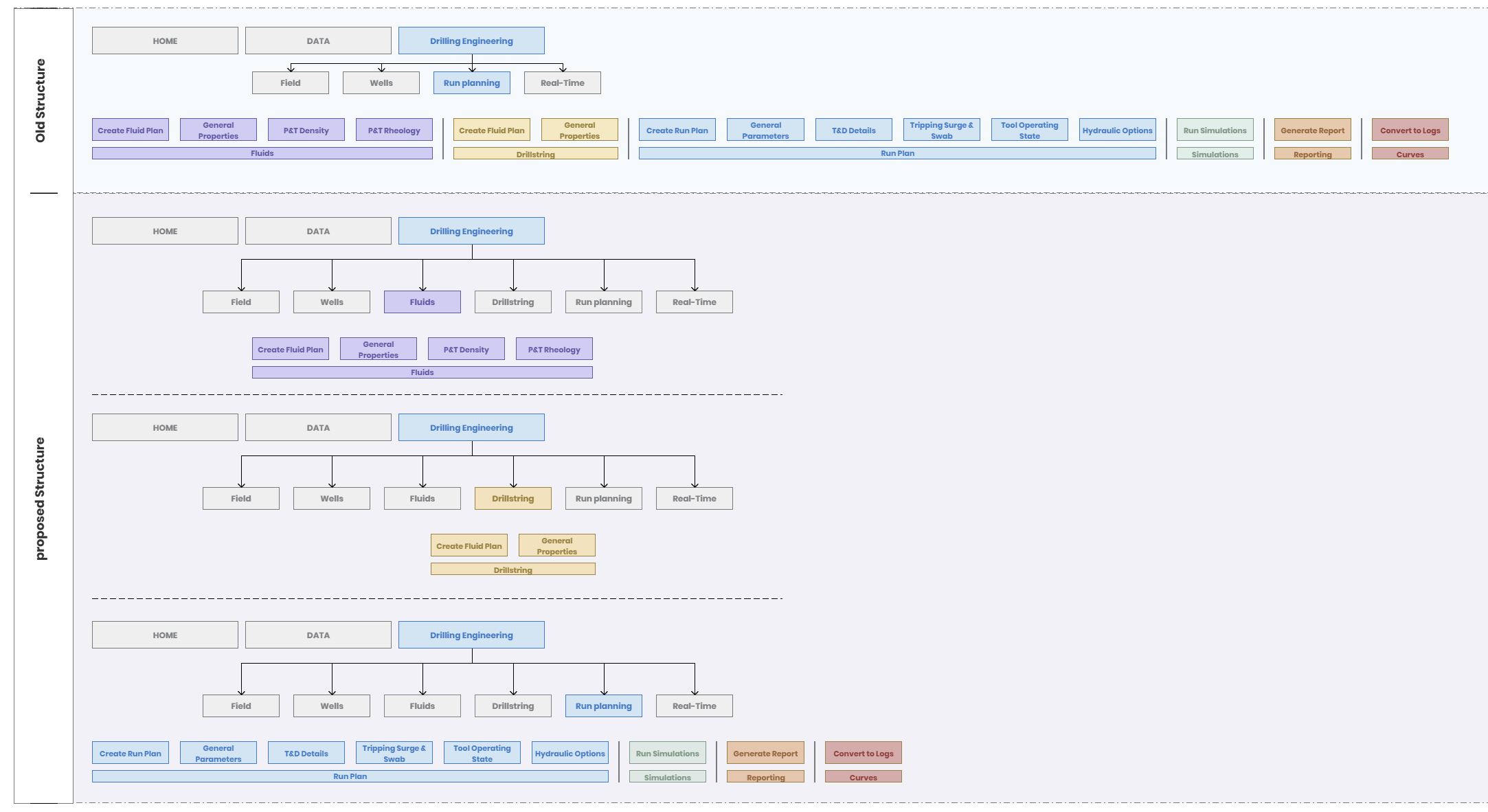
Before - Very Busy Workflow, No Space for New Features
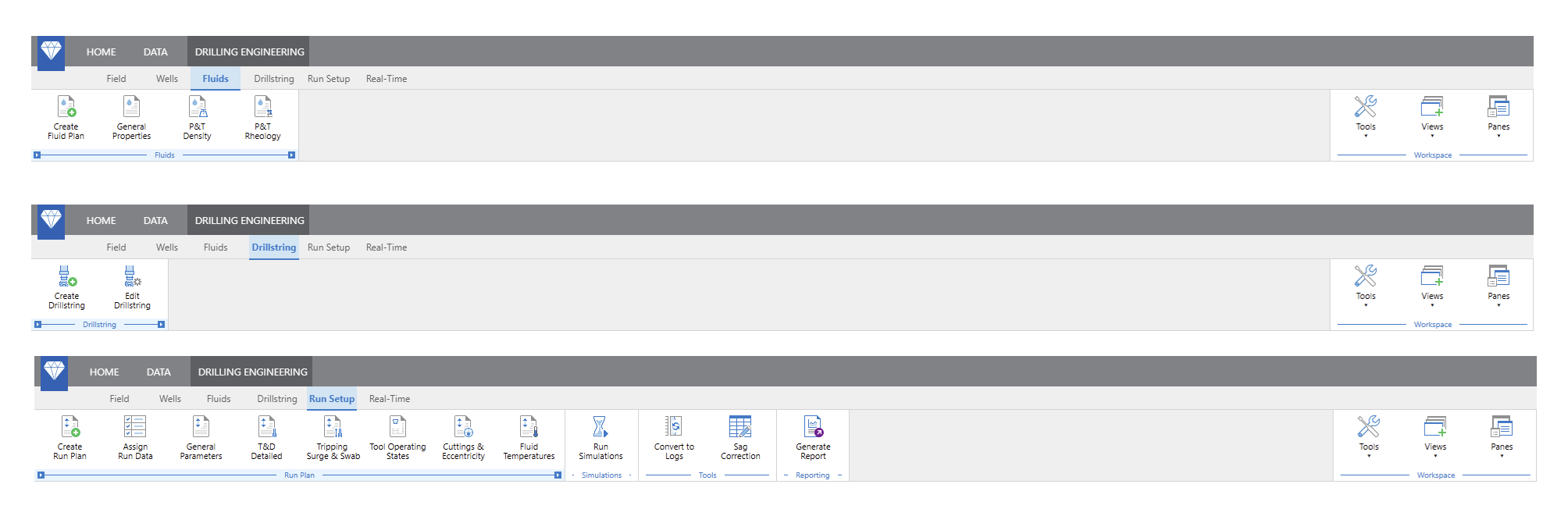
After - Focused Workflows, Ready for New Features

Goal
Redesign the Run Planning structure to improve usability, align with user workflows, and create a scalable foundation for future product growth.

Impact
Established a future-proof information architecture that reduced workflow complexity, removed structural constraints on product decisions, and enabled sustainable feature expansion.

Success Metric
Reduced complexity and cognitive load
Improved workflow clarity
Scalable for future featuresAligned with platform UX standards
Approved by SMEs and stakeholders
Product Context & System Constraints
JSWE (Jewel Suite Well Engineering) is a complex engineering software used by multiple roles, including drilling engineers, application engineers, real‑time specialists, and support teams.
As the platform expanded with new users and features, one of the core areas — the Run Planning tab — began to show clear scalability and usability issues. The tab had accumulated multiple workflows over time, becoming visually dense and increasingly difficult to extend without compromising usability.
The risk was no longer limited to usability alone. The structure of the tab was actively influencing product decisions, with subject‑matter experts questioning whether new features should be built simply because “there was no room.”
This signaled a system‑level problem rather than a UI one.
Role, Responsibilities & Design Scope
I initiated and led this project as Lead Senior UX Designer.
My responsibilities included:
Identified the structural risks early
Built alignment across SMEs and stakeholders
Defined a future‑proof information architecture
Translated complex workflows into a scalable tab structure
Supported development through implementation and release
The Challenge
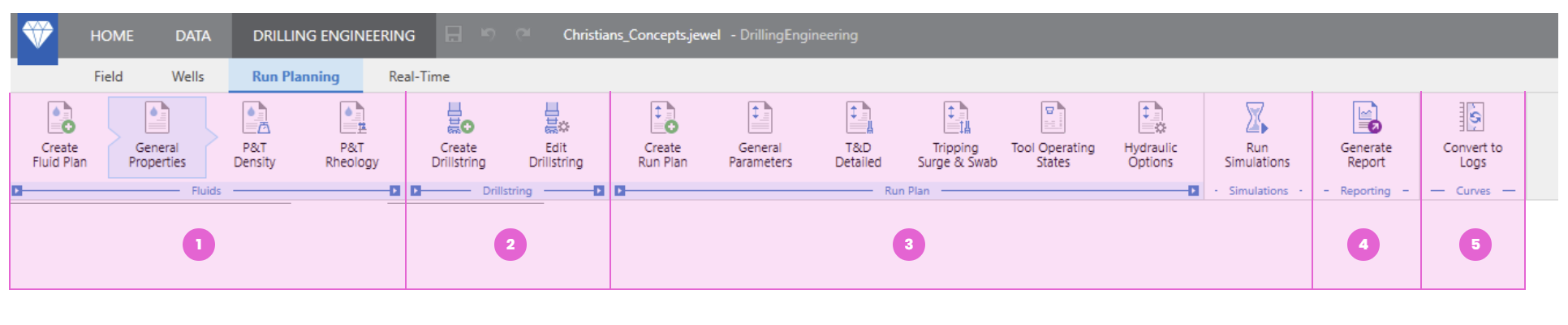
The Run Planning tab had evolved into a multi‑purpose container holding several unrelated workflows.
Key issues:
The tab was visually and cognitively overloaded
Critical workflows were competing for attention and space
Upcoming features would further increase complexity
UX goals of “fit‑to‑purpose” and efficiency were no longer met
The structure no longer aligned with the broader Jewel Suite UX guidelines
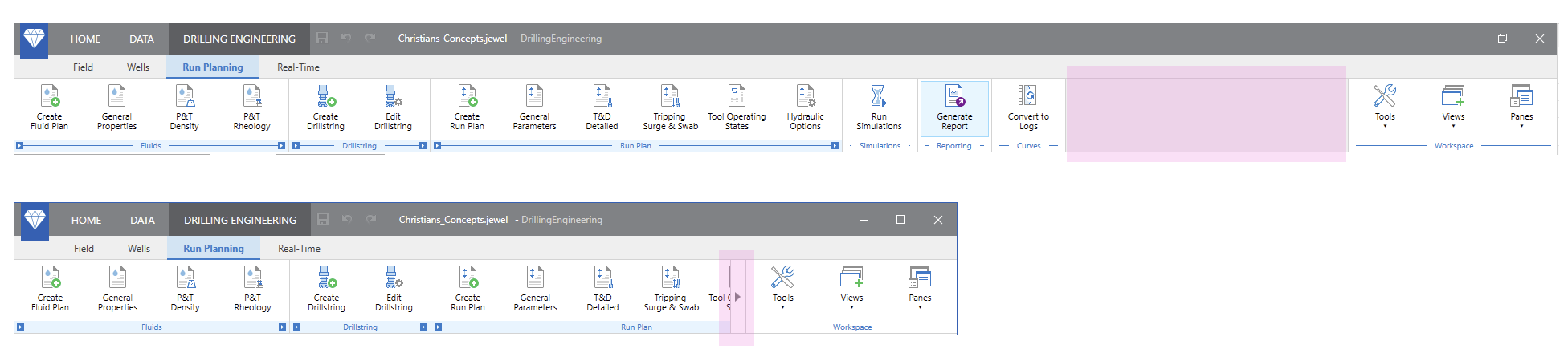
Most importantly, space constraints were beginning to limit product decisions, which should never be a reason to block user‑needed functionality.
Old Run Planning workflow- 5 different subjects in one place
Different desktop sizes- Not enough space for new features
The Opportunity
This was an opportunity to:
Redesign the tab structure around user workflows, not feature accumulation
Improve efficiency by making each tab fit a specific purpose
Enable future growth without structural redesign
Realign the product with shared UX guidelines across the Jewel Suite ecosystem
Avoid scenarios with one-tab one-item
Comparing to other software’s in the Jewel Suite Ecosystem
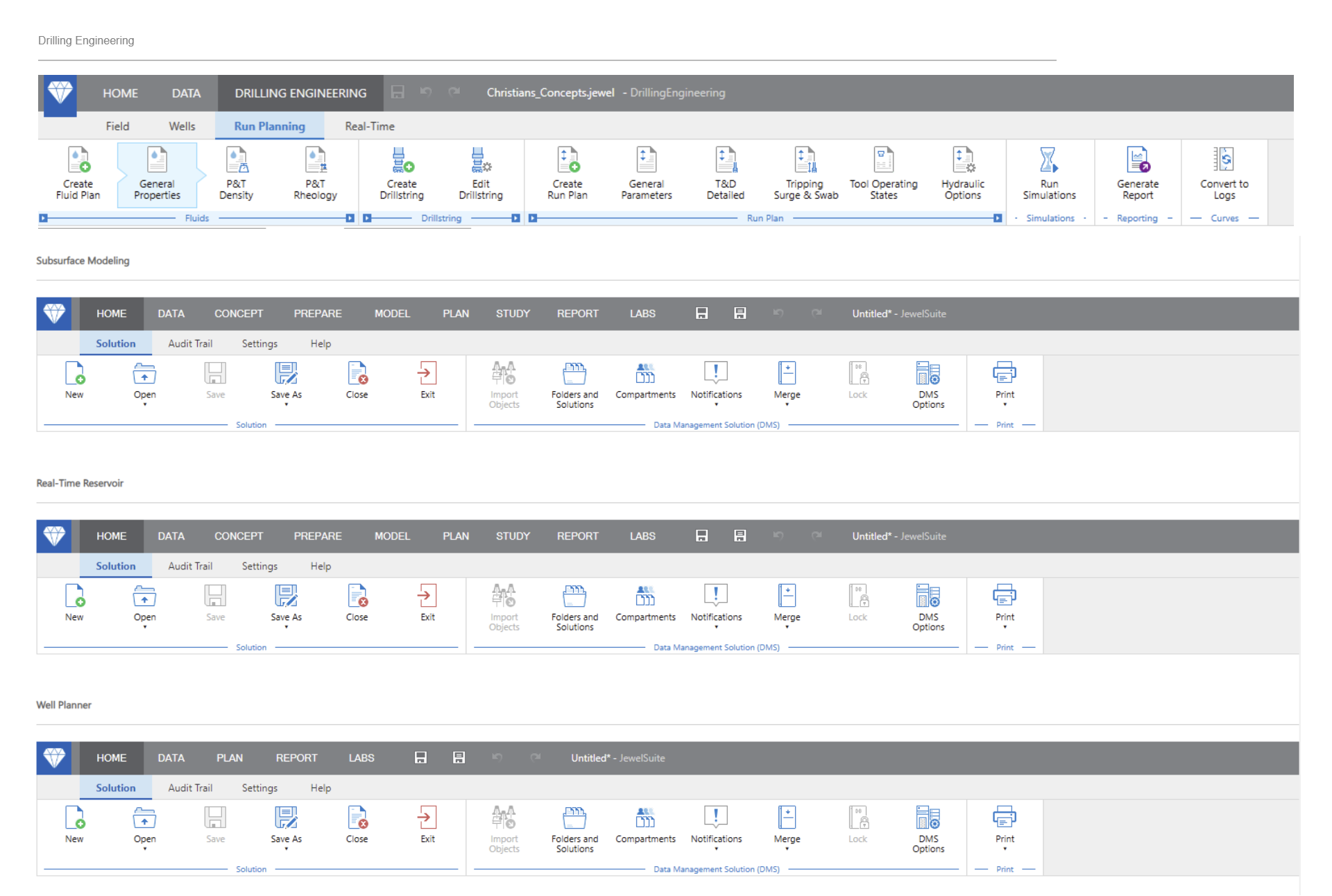
From a development perspective, reorganizing tab locations and introducing new tabs was low effort, while the UX impact was high reward.
Users & Needs
This initiative affected all JSWE users, including:
Drilling engineers
Application engineers
Real‑time engineers
Support roles
Despite different responsibilities, all users relied on the Run Planning area as a central part of their workflow, making clarity, speed, and predictability essential.


Goal With The New Proposal
1.
Focused Run Planning workflow
2.
educe visual clutter and cognitive load
3.
Establish a scalable information architecture
4.
Create clear boundaries between different tasks and responsibilities.
5.
Remove UX-driven constraints from product and feature decisions.
6.
Align the experience with Jewel Suite UX guidelines and patterns.
7.
Improve efficiency, clarity, and predictability for all user roles.
Process & Activities
1. Analysis & Alignment
I began by analyzing the existing header and tab structure and prepared a presentation highlighting:
Current usability issues
Scalability risks
Misalignment with UX principles
This was presented to all relevant SMEs to establish shared understanding and agreement that change was necessary.
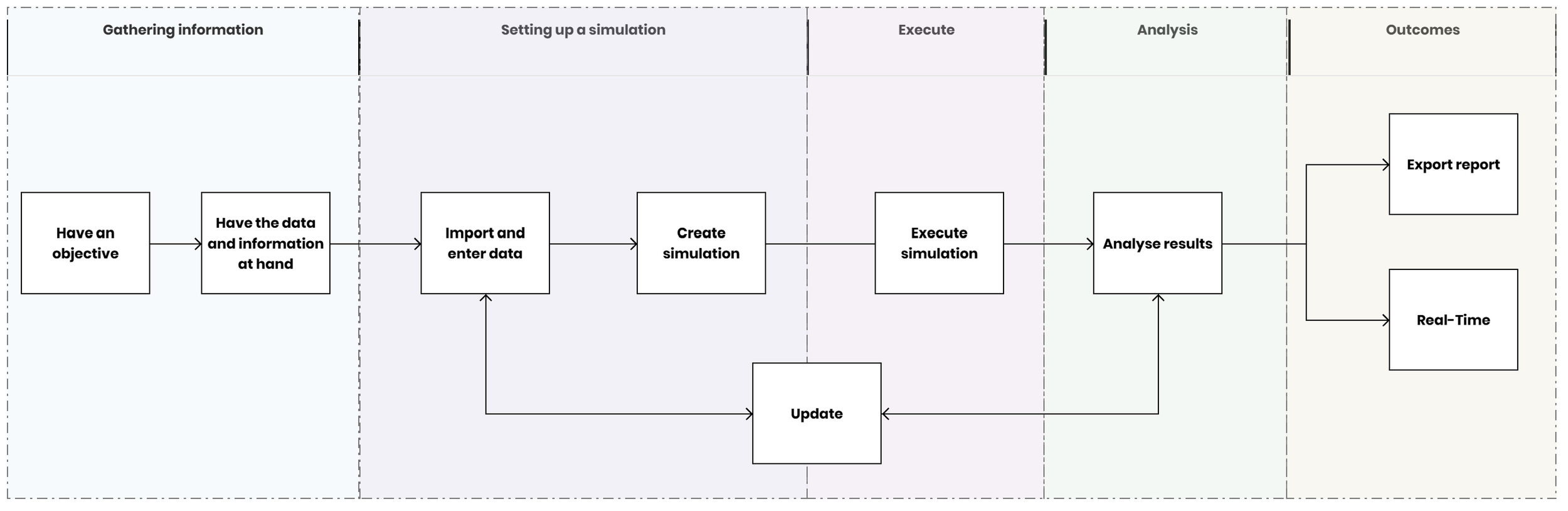
Run Planning User Journey
2. Workflow Definition Workshops
I facilitated a workshop with SME's to align on:
The actual end‑to‑end work process
How users move through tasks
Where cognitive load was unnecessarily high
This ensured that ideation was grounded in real workflows, not assumptions.
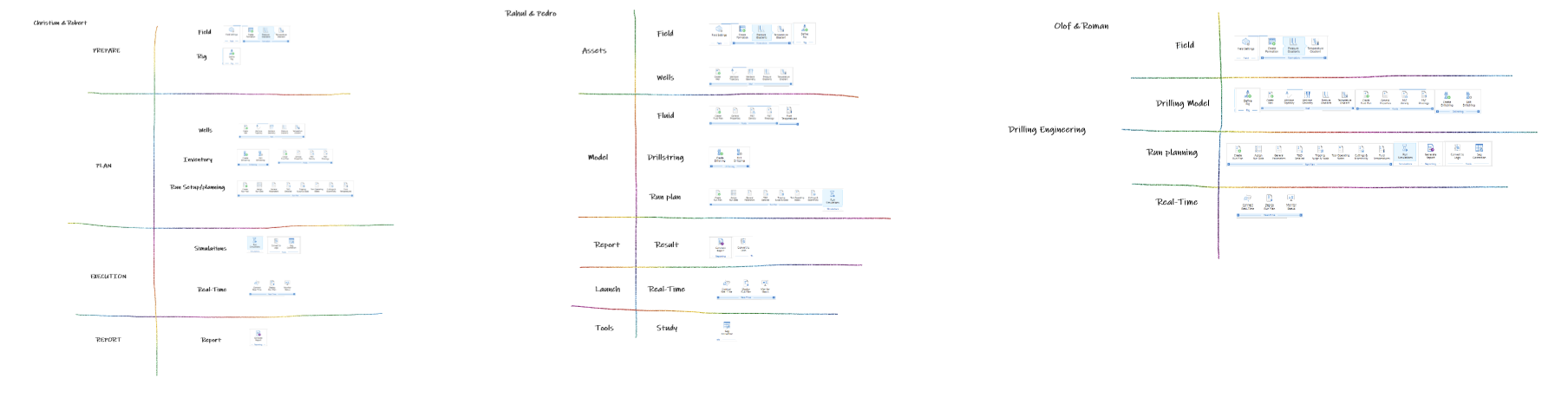
Workshops with different Domain Experts
3. Focused Brainstorming Sessions
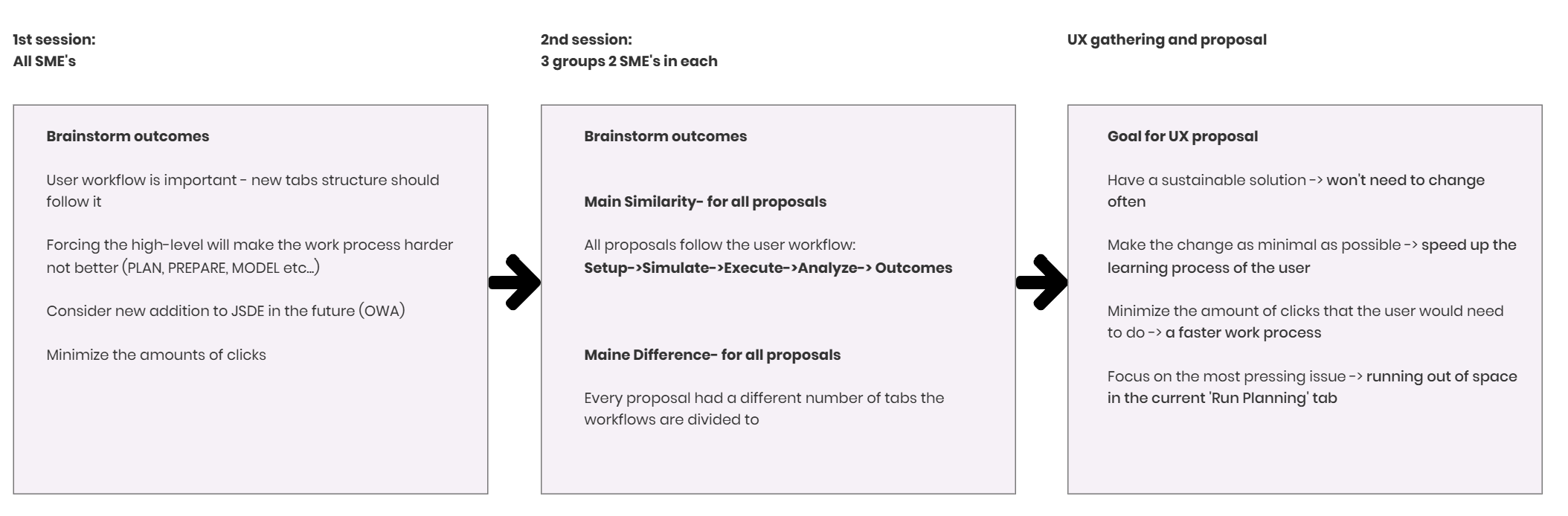
To avoid dominant voices influencing outcomes, I divided SMEs into three smaller groups, each running a separate brainstorming session.
This approach:
Encouraged open contribution
Surfaced differing mental models early
Reduced late‑stage disagreement
Summary of work Process
4. Prototyping & Feedback
I created clickable prototypes representing different structural approaches and shared them with each group to collect feedback.
5. Synthesis & Decision‑Making
I consolidated insights from all groups, analyzed the pros and cons of each solution, and presented:
A clear UX recommendation
Supporting rationale
Clickable prototype walkthroughs
This led to alignment and approval to proceed with development.
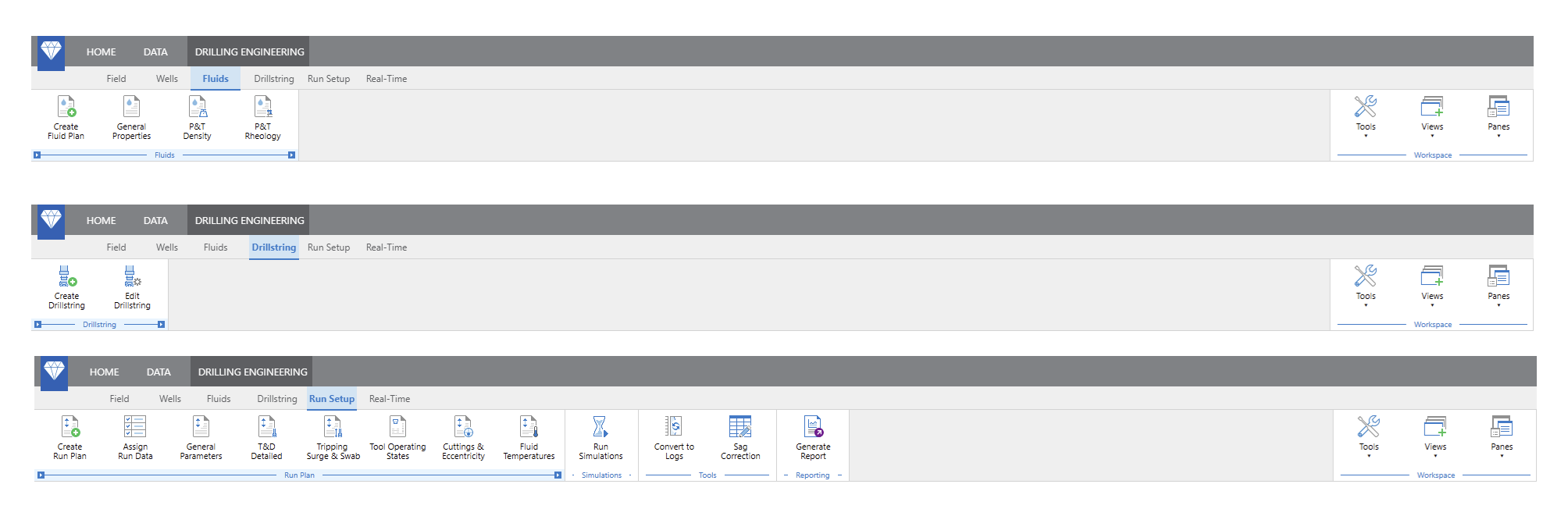
New Proposal
The UX Outcome
The final proposal:
Redistributed workflows into fit‑to‑purpose tabs
Reduced visual and cognitive overload
Created clear boundaries between different task types
Enabled future features to be added without re‑architecting the UI
Re‑aligned JSWE with shared Jewel Suite UX guidelines
Rather than solving a single UI problem, the solution addressed the long‑term health of the system.
Impact
Removed UX‑driven constraints from product decision‑making
Improved efficiency for daily workflows
Established a scalable structural foundation
Strengthened trust between UX, SMEs, and development
Demonstrated how UX can proactively shape product direction
New Proposal focused workflow’s
Constraints & Trade‑offs
The software was already in active use, so changes needed to be evolutionary, not disruptive.
Multiple user roles and mental models had to be considered.
The solution needed to align with existing Jewel Suite UX patterns
Any structural change had to be clearly justified to SMEs and development
Trade‑off:
Rather than optimizing the existing crowded tab further, I advocated for a structural re‑distribution of workflows, accepting short‑term adjustment for long‑term scalability and clarity.
Reflection
This project reinforced the importance of recognizing when usability issues are symptoms of structural problems.
By stepping back from screen‑level optimization and focusing on workflow logic and information architecture, we were able to prepare the software for growth without increasing complexity.
It also highlighted the value of facilitation and alignment as core UX skills — especially in complex, expert‑driven domains.